Strategic Outlook
Ever wondered what it really takes to build a website that reflects the standard your brand deserves?
This guide brings clarity to what shapes web design costs across Europe, the GCC, and North America. This way, you can plan confidently and make decisions grounded in understanding, not guesswork.
In 2025, the question isn’t “How much does a website cost?”, it’s “What level of craft and precision do I want my brand to represent online?”
Depending on your goals, a website can range from a few hundred euros for a do-it-yourself builder to €20,000–€30,000 or more for a fully bespoke project crafted by a dedicated team. The difference lies not only in design or features, but in how deeply the project understands your brand’s essence.
At Leading, we believe pricing should be transparent and educational. That’s why we created the Project Planner: a clear, interactive tool that helps you explore the key elements affecting project cost, from creative direction to technical depth.
Whether you’re a growing business testing your first digital presence or an established brand planning a complete transformation, this planner helps you see the bigger picture and understand the value behind the investment.
Website Investment Guide: Understanding the Price of Excellence
The short answer? It depends, but not in a vague way. Every project’s cost is shaped by what you want to achieve, how deep your brand story goes, and the level of craftsmanship you expect.
We begin by understanding your goals and defining the scope that truly matches your brand’s vision.
If your budget is under €1,000, a DIY builder might help you establish an initial digital footprint.
But if your ambition is to build a crafted experience, designed for scalability and performance, professional studios like ours deliver the structure, precision, and emotional connection your brand deserves.
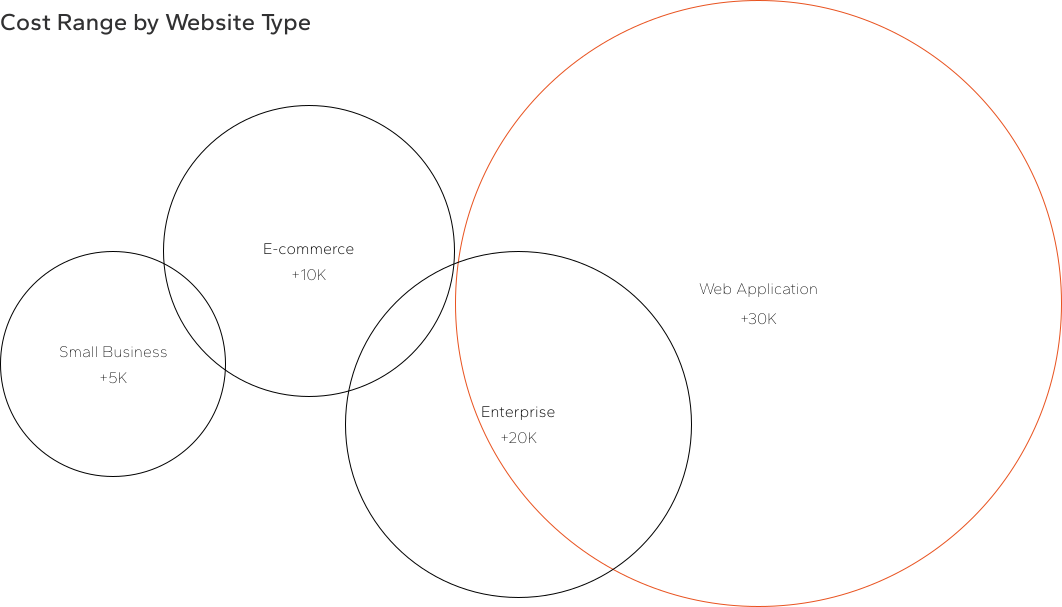
To give you meaningful clarity, our Project Planner walks you through each factor that influences pricing: from strategy and UX to development scale and creative depth. It provides a transparent, high-level estimate so you can understand not just what it costs, but why it costs that way.
For brands seeking to benchmark or compare, we always recommend creating a Website Design Brief.
It’s a simple yet powerful step that allows studios and agencies to deliver quotes aligned with your real objectives.
Key Investment Drivers: What Defines the Cost of a Premium Platform?
Every website has a purpose, and that purpose defines its structure, design, and cost.
The real question isn’t how much a website costs, but what elements shape the investment behind it.
Your website’s cost begins with clarity of vision.
A small business seeking an elegant digital presence may only need a few essential pages, while an established brand expanding into new markets might require custom functionality, multilingual structure, and scalable architecture.
Next comes features and integrations: forms, booking systems, e-commerce, interactive content, or CRM connections. Each layer adds value, complexity, and impact. What truly differentiates costs, however, is who builds it and how it’s built.
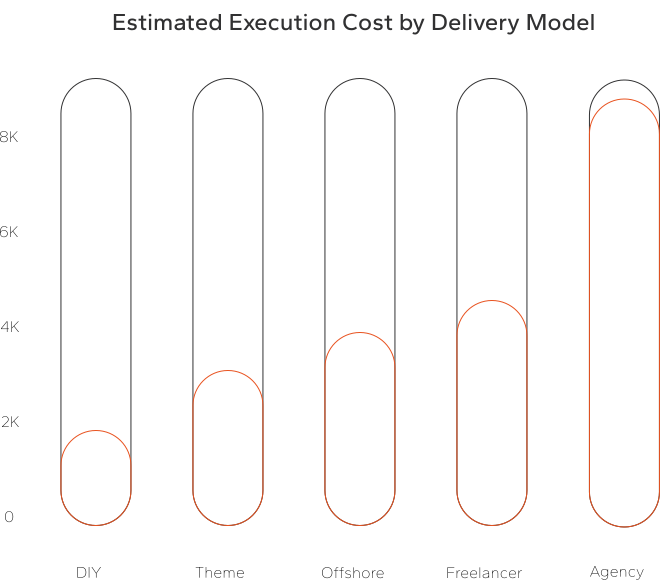
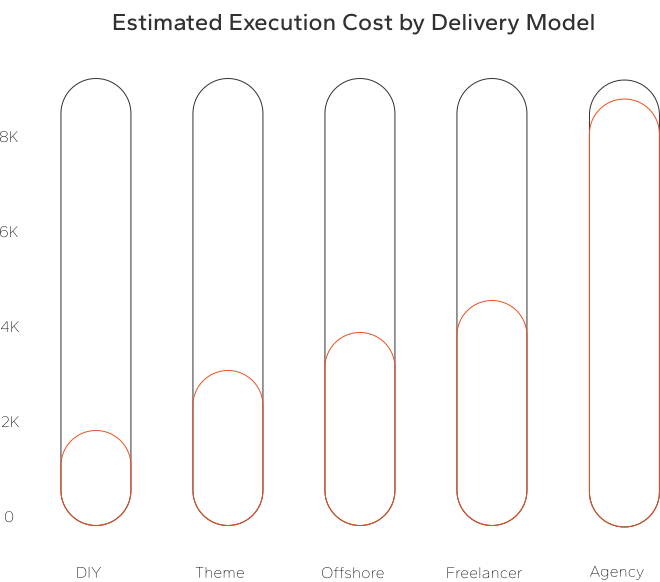
DIY builders or generic templates can range from €20 to €100 per month, offering simplicity but limited flexibility.
Freelancers and offshore developers may charge between €1,000–€5,000, suitable for smaller, less complex sites.
Professional studios, on the other hand, combine design, strategy, and engineering into one cohesive craft; investments typically starting from €8,000 and scaling to €30,000+ for bespoke, high-performance builds.
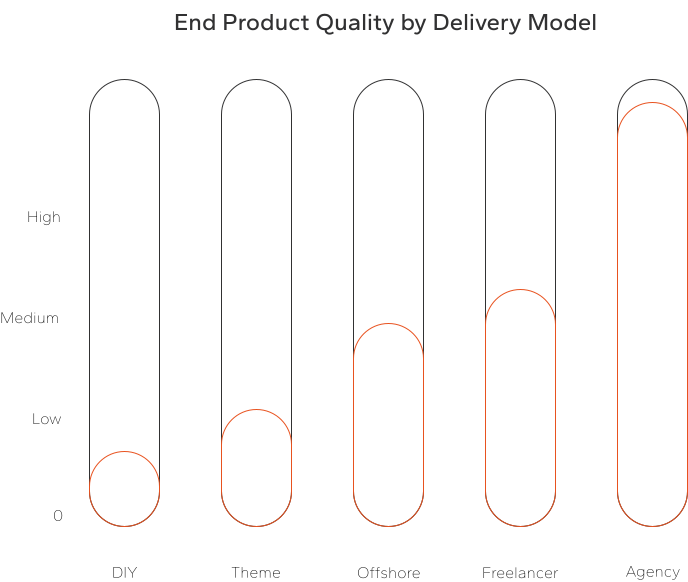
Each tier serves a different type of brand. The key is knowing what level of experience, precision, and scalability your brand truly needs.
That’s why our Project Planner helps you visualize these layers, so instead of guessing, you can make informed, confident decisions.
Operational Architecture: Hosting, Maintenance, and Scalability Costs
Beyond the build itself, there are ongoing elements that define the full investment behind a professional digital presence. This section unpacks those essentials, not to overwhelm you, but to empower your planning with clarity and foresight.
A high-performing website is more than design and development: it’s an ecosystem. To operate at the level your brand deserves, here are the associated investments you should consider:
- SEO & Visibility
For brands aiming for organic reach, strategic SEO is non-negotiable. DIY tools may cost €50–€200/month, while working with SEO consultants or studios typically ranges from €400–€1,500/month in Europe or North America. In the GCC, premium multilingual SEO services may go higher, especially when local search behavior is complex. - Domains & Security
Domain registrations typically range from €10–€50 per year, with premium names costing significantly more. For credibility and security, an SSL certificate (approx. €50/year) is essential; it’s no longer optional for a trusted brand presence. - Hosting
Shared or unmanaged hosting can start around €15–€30/month, while premium managed hosting, which is essential for high-traffic or performance-critical sites, may start from €150/month and scale based on geography and support level. GCC-based hosting with data residency compliance may come at a premium. - Licenses & Tools
From analytics platforms to marketing integrations and premium plugins, subscription tools add layers of functionality. Costs vary from €10 to €300/month depending on stack complexity. - Brand Assets & Content
If you’re building from the ground up, expect investments in brand identity, stock licenses (€1–€250/image), or custom photography. Video licensing or production may start from €50 and scale significantly depending on usage and rights. - Copywriting
Content shapes perception. For brands that value clarity, tone, and conversion, professional copywriting is a strategic investment; this typically ranges from €500 to €5,000 depending on scope and language coverage. - Maintenance & Growth
Ongoing support, CMS updates, feature expansion, or care retainers ensure your platform evolves with your brand. Monthly retainers can start from €200 and vary based on scope and region. - Marketing & Integration
Whether it’s CRM integration, email automation, or social media synergy, these elements elevate your site from passive to proactive. Depending on tools and goals, expect monthly costs from €100 to €1,000+.
We don’t list these to add friction, we present them to create clarity.
Great brands plan with intent, not assumptions.
Our Project Planner helps you see how these elements align with your vision, so each euro you invest builds long-term value.
Defining the Scope: Project Categories & Digital Solutions
Not every brand needs the same digital structure. From agile startups to established multinationals, the right website type is the one that aligns with your growth, ambition, and audience. Here’s how to choose strategically.
DIY Builders & Theme-Based Templates
For emerging ventures or personal projects with limited scope, DIY platforms and pre-designed themes offer a starting point. Solutions like WordPress, Shopify, or Wix provide templated frameworks you can customize, typically ranging from €15–€50/month, including basic hosting. One-time purchases of premium themes can range from €50 to €200.
While suitable for initial visibility, these options often limit flexibility, performance, and future scalability. They are best when the objective is simplicity, not distinction.
Custom Small Business Sites
Crafted for growing brands that need presence and personality. These websites involve planning, UI/UX design, and tailored development, with investments starting from €8,000 to €30,000 depending on region and depth.
Custom builds allow for performance, branding consistency, and integrated features like booking, CRM, or multilingual content, all essential for businesses serving Europe, GCC, or North America.
E-Commerce Platforms
If you sell online, your platform must do more than process payments, it must also build trust and guide conversion.
Theme-based e-commerce setups typically cost €1,500–€5,000 for a professionally configured storefront.
Custom e-commerce experiences, designed for scale, automation, and audience-specific flows, begin at €8,000 and can exceed €40,000, depending on features like localization, inventory sync, and advanced checkout logic.
Enterprise-Level Websites
For brands operating at scale, with multilingual markets, API integrations, and layered user roles, enterprise websites are not optional, they’re foundational.
Budgets begin around €25,000 and scale based on strategic complexity, infrastructure, and required compliance across territories.
Web Applications
More than a website: a tool, platform, or ecosystem. From internal portals to global marketplaces, web apps integrate data, UX, and function seamlessly.
Outsourced development typically starts from €30,000, though costs vary dramatically depending on scope and logic depth. Brands with unique workflows or data-driven models often move in this direction.
Final Note:
Each format serves a different kind of growth.
Our Project Planner helps you explore which approach fits your vision best, so you choose not just based on price, but on potential.
The DIY Route: Market Realities & Hidden Costs in 2026
Building your own website has never been more accessible, especially with AI-powered platforms and drag-and-drop builders. But accessibility doesn’t equal suitability. This guide helps you evaluate if the DIY route aligns with your brand’s ambitions and long-term goals.
For early-stage ventures or personal projects, DIY platforms like Wix, Squarespace, GoDaddy, and IONOS offer a low-cost, fast-launch path. Subscriptions typically range from €10 to €40 per month.
For e-commerce, platforms such as Shopify or BigCommerce provide tiered plans from €25 to €500/month depending on integrations, product volume, and traffic expectations.
Newer AI-based builders like Hostinger, Framer, or 10Web offer automation and convenience, often starting free and scaling up to €200/month.
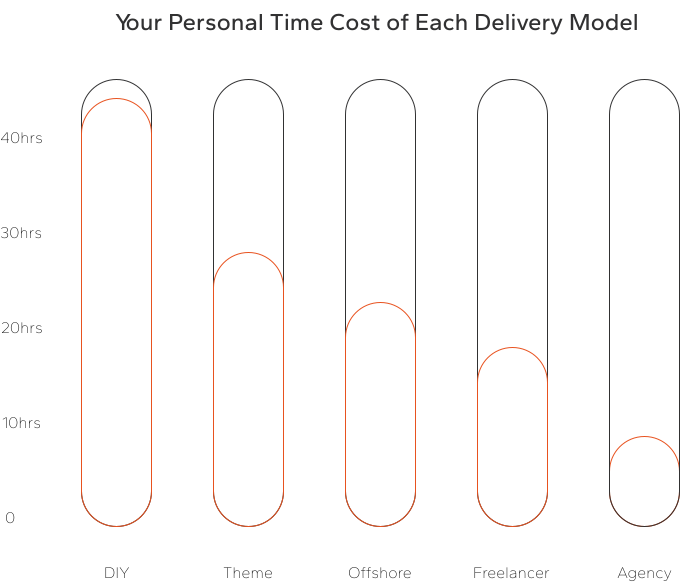
Things to Consider Before Choosing DIY:
- Time Commitment:
Even with modern tools, a quality site requires time for design, content, and setup. If your time is limited or your skills are not digital-native, hidden costs can rise quickly. - SEO Limitations:
While DIY tools often advertise built-in SEO, performance in real-world rankings depends heavily on strategy, structure, and optimization, which are areas where generic platforms struggle. - Scaling Constraints:
Most DIY platforms are template-bound. As your needs grow, limitations in customization, loading speed, and integration flexibility can slow your progress or force a rebuild. - Hidden Expenses:
The base cost might look attractive, but plugins, templates, forms, email tools, and domain upgrades often push total costs well beyond initial expectations, especially over time.
DIY solutions serve a clear purpose: speed and cost-efficiency for minimal needs. But if your brand aspires to compete in mature markets like Europe, the GCC, or North America, investing in professional foundations often proves more strategic in the long run.
The Craftsmanship Gap: DIY Builders vs. Custom Engineering
The tools are there. The tutorials are everywhere. But the real question isn’t “Can you?”, it’s “Should you?”
This section offers a clear-eyed comparison between building your site yourself and partnering with professionals who align with your brand’s ambition.
Advantages of DIY Platforms:
- Lower Initial Investment:
For brands with limited resources, DIY tools offer a cost-effective starting point; your main investment is time, not capital. - Flexibility & Control:
You can implement changes instantly, with no third-party delays, which is ideal for experimentation or fast pivots. - Attractive Templates:
Today’s platforms offer a range of pre-designed themes that look polished and modern, even with minimal input. - Ease of Use:
Drag-and-drop interfaces make setup intuitive, requiring no code or prior experience.
Limitations to Consider:
- Time Burden:
While cost-saving upfront, the time needed to learn, build, test, and fix issues can outweigh the savings, especially for decision-makers with higher priorities. - Design Constraints:
Predefined templates often lack the flexibility to truly reflect your brand’s uniqueness or adapt to future scaling needs. - SEO & Performance Challenges:
DIY sites often underperform in organic visibility due to rigid architecture, slow loading speeds, or lack of proper markup control. - Ownership & Longevity:
Many platforms operate on rental models, meaning you don’t fully own the codebase or design. This can become a problem if you decide to migrate or scale.
Designing your own site may work for solo creators or temporary campaigns. But for brand-led growth in competitive markets, the most efficient path is often partnering with those who think not just about building a site, but about building your presence, your credibility, and your long-term value.
Choosing a Partner: Freelancers vs. Strategic Studios
Choosing the right partner to build your website is more than a budget decision, it’s a strategic one. This guide contrasts the dynamics of working with freelancers versus full-service studios, so you can align your decision with your brand’s long-term vision.
Freelancers – Flexible but Fragmented
Pros:
- Cost-Efficient for Simple Projects:
For straightforward, low-complexity builds, a skilled freelancer can deliver good value, especially with offshore options. - Personal Communication:
Direct, one-on-one contact can lead to faster response times and a clearer understanding of expectations. - Adaptable Schedules:
Many freelancers operate with agility, making them ideal for brands needing faster turnarounds or fluid collaboration.
Cons:
- Limited Capacity:
One person cannot replicate the depth, specialization, or continuity of a full team; this becomes evident in complex or evolving projects. - Risk of Misalignment:
Quality varies widely. Portfolio claims do not always reflect delivery. Time zone and language gaps can amplify execution risk. - Inconsistency Over Time:
Availability may fluctuate. Freelancers may take on other work, pause operations, or change scope unexpectedly.
Agencies & Studios – Strategic, Scalable, Structured
Pros:
- Multidisciplinary Expertise:
From UX to DevOps, you gain access to a dedicated team calibrated for performance, design, and scale. - Process-Driven Execution:
Agencies bring structure, with clear timelines, quality controls, and defined responsibilities, ensuring consistent delivery. - Long-Term Support:
Most studios offer maintenance, updates, and strategic growth services post-launch, becoming an extension of your team. - Brand Alignment:
Creative direction, tone, and architecture are handled holistically, not in isolation, giving your brand a coherent digital expression.
Cons:
- Higher Investment Required:
Excellence at this level is rarely cheap, but when executed well, it’s not a cost. It’s an asset. - Longer Timelines:
Comprehensive builds, especially bespoke solutions, take time. The best studios won’t rush what matters.
Our Perspective:
If your brand aspires to lead, not just exist, then consider who can help you think, build, and scale with that ambition in mind. Freelancers may offer a starting point. Studios offer a trajectory.